
Side Quests
Residencies, Experiments, and Learning Journeys
Being a creative person involves constantly being distracted by choice or by design. There are always new skills to be explored, new materials to experiment with and new visual art forms to include in my repertoire of artistic cross training. Here are some of the artist residencies, master classes and experimental test kitchen/studio documentation of media other than ceramics.
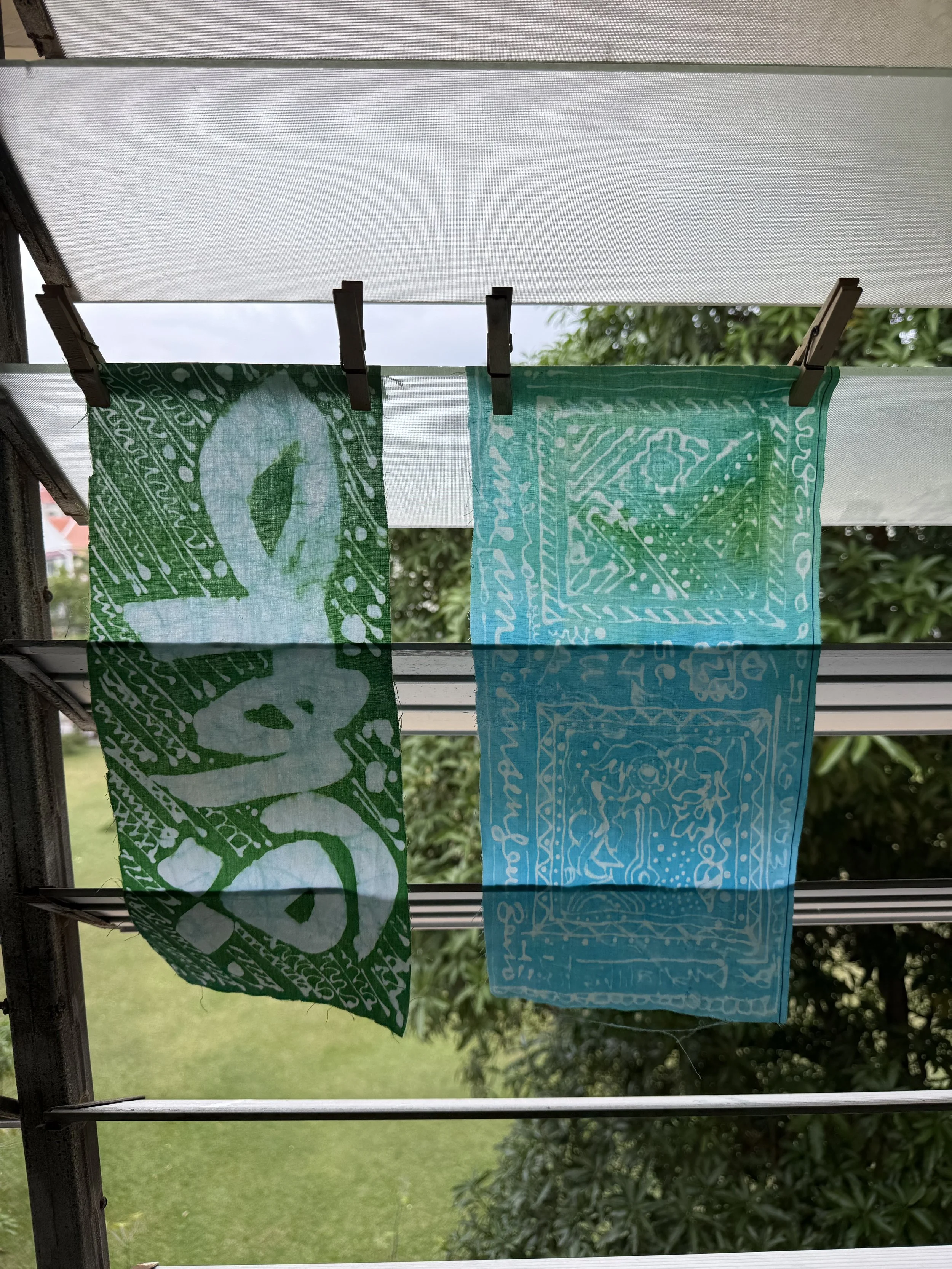
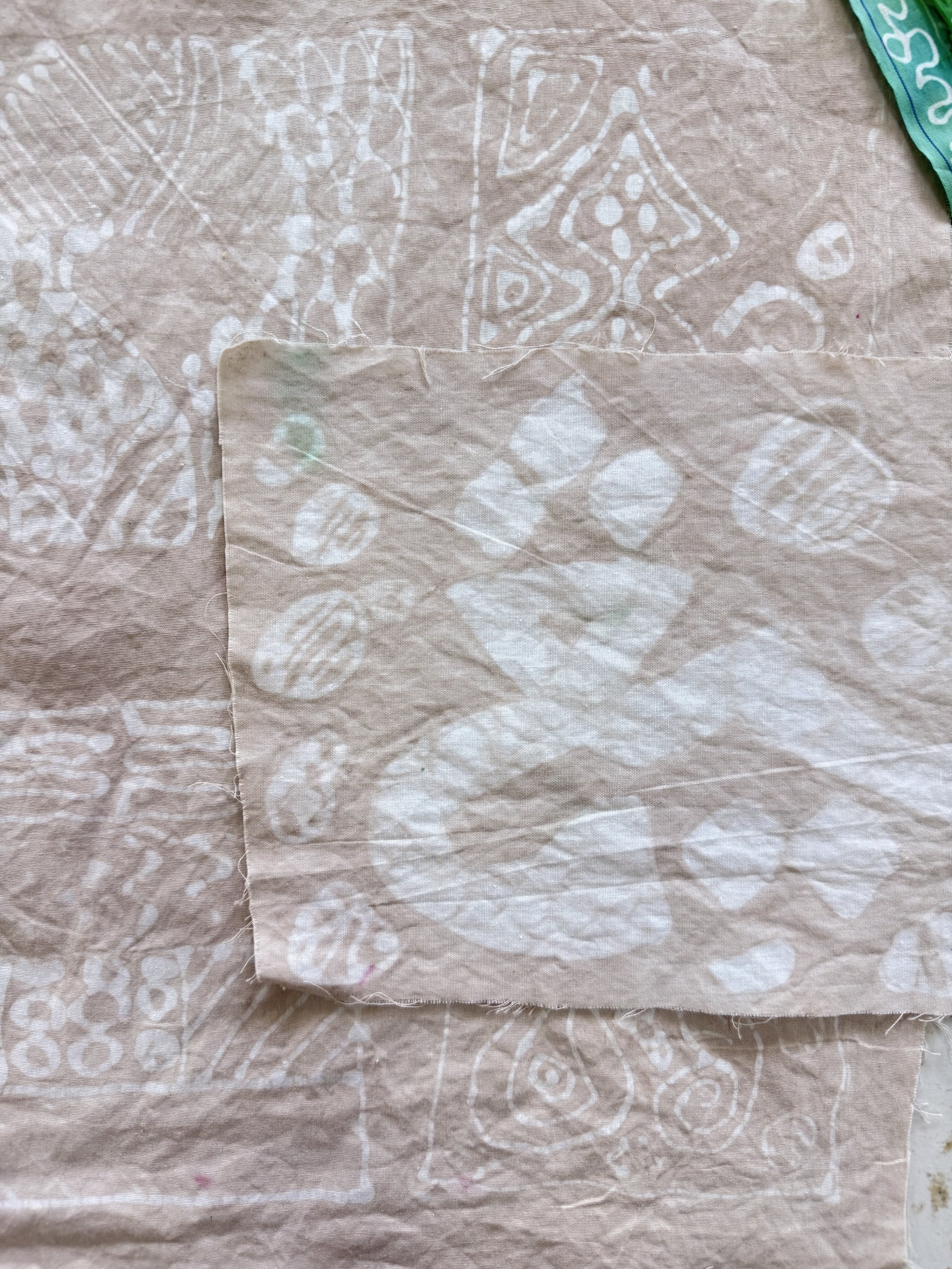
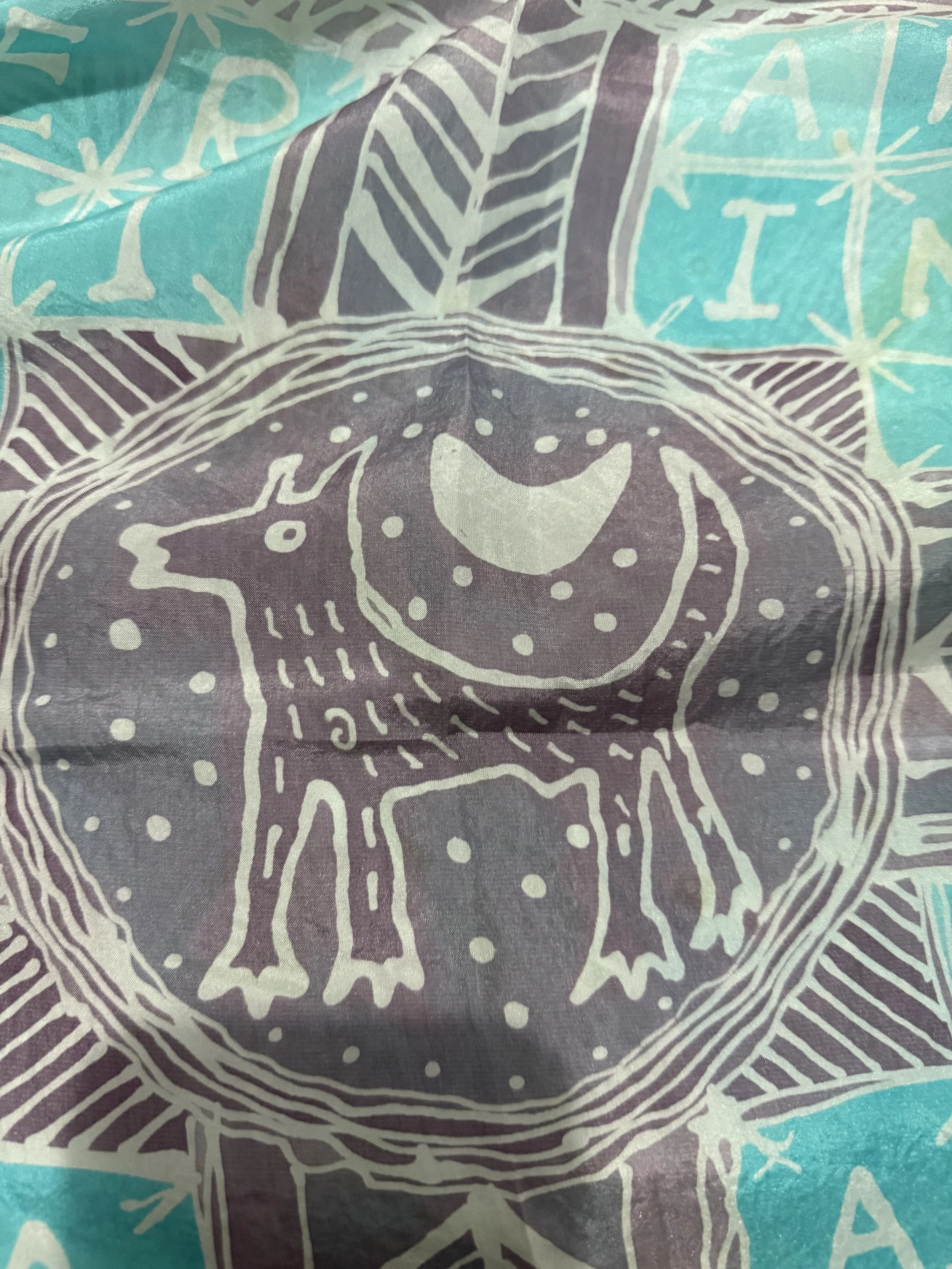
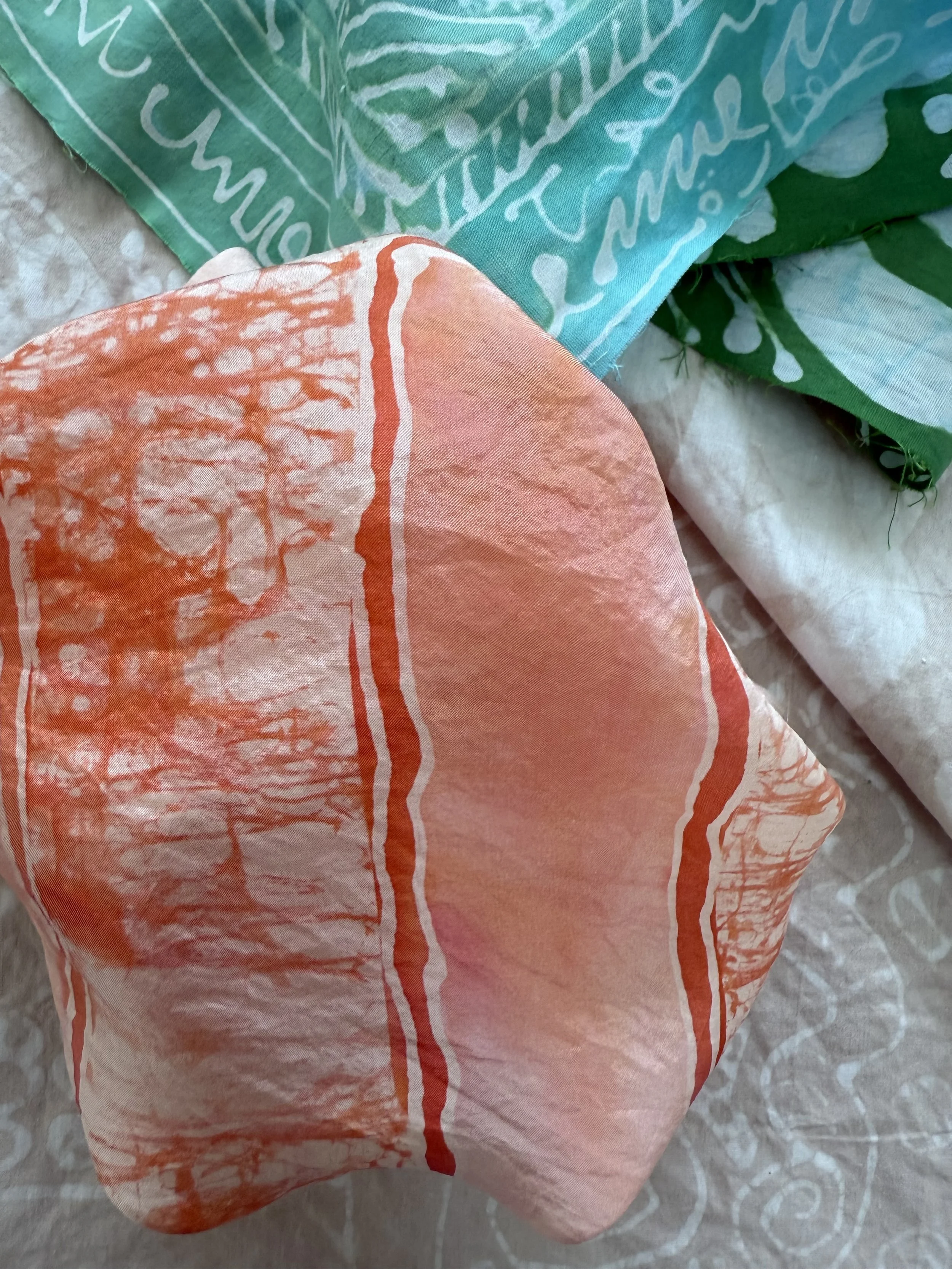
An exploration in batik resist techniques and mud cloth dyeing during a short three-day residency in Singapore’s quiet eastern suburbs where my father grew up.
Batik Residency
405 ArtResidency
Premise
Taking the Shafi’i school of jurisprudence’s stance on the impurity of dogs and the prescribed ritual cleansing of sertu – cleaning surfaces contaminated by dog saliva and contact with pork products with earth and water. As a dog owner and a ceramicist, I sought to explore textile dyeing methods usings the clay bodies that I regularly work with in my ceramic practise to interrogate the often polarising attitudes the Malays have towards the much debated and questionable ritual impurity of dogs and pigs in comparison to the Māliki school of jurisprudence which considers all living beings as ritually pure.
Source texts include the 10th century Baghdadi collections of poetry and prose praising the virtues of man’s best friend, faḏl’ul-kilāb, ‘alā’l-kathīr miman labisa’th-thiyāb – The Superiority of Dogs over many who wear clothes, by Ibn al-Marzuban.
In this short 3 day residency and masterclass, I explored wax resist batik tulis techniques and mud cloth dyeing experiments along with synthetic dyes as a starting point to explore the materiality of dyed textiles as an alternative primary material in my ceramic practise – I intend to use dyed fabrics to create vessels for cleansing, using the visual language of awfāq (pl for wafaq) or magic squares used predominantly in esoteric practices in the Islamicate world.
Sertu - When a symbolic act becomes an obsession
A term in the Malay language for the process of cleaning surfaces that has come into contact with dogs and pigs - washing 7 times with water and once with earth. A practise derived from the literal interpretation of the Hadith suggesting that one should clean a bowl or drinking vessel in such a manner after a dog has licked it. The Māliki opinion however is that, it is unnecessary but do it as an irrational act of piety - a symbolic ritual - not because a dog’s lick renders a vessel or your skin ritually impure.